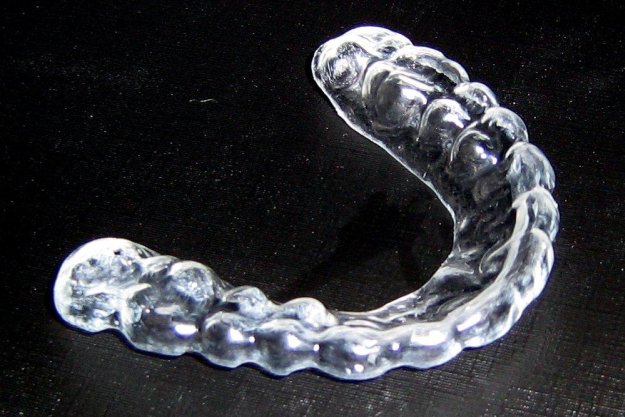
 Most of the time, if you visit your dentist and tell him you're experiencing TMJD symptoms, he will suggest fitting you for an occlusal guard, also known as a bite splint or a night splint. This serves several purposes - protecting your teeth and gums from the wear and tear caused by grinding or clenching during your sleep, helping to optimally reposition the jaw joint, muscle relaxation, and altering the inputs the muscles and joint receptors in the TMJ provide to the brain, which ultimately can lead to an inhibited reflex from the trigeminal nucleus in the pons medulla, AKA less pain!1
But is that enough to promise relief from the clicking, popping, pain, headaches, and limitation in movement? Studies on the efficacy of splints alone in treating TMJ dysfunction are inconclusive.2 This does not mean that they do not serve a purpose or just plain don’t work, but it does mean that there are other non-invasive treatments (like physical therapy!) that may help in conjunction with the right splint. Your physical therapist can help make sure your horizontal occlusal plane (read: the way you bite and where you contact first with your teeth) is level through addressing postural and mechanical problems, aid in relaxing areas in your head, face, and jaw muscles that are painful from overuse even at rest, and work with your dentist to make sure your splint is appropriate for the changes your bite may undergo during treatment. The right combination of treatments is an effective and cost-efficient approach to making sure your jaw is stable and able to function properly while you bite, chew, smile, yawn, and sleep. Unsure if your splint is doing enough to get you relief? Ask your dentist to refer you to HouseCall Head and Neck for physical therapy, it may be the smartest health move you’ll make! 1. Okeson, J. 2013. Management of Temporomandibular Disorders and Occlusion. 7th Edition. 2. Dao, TT; Lavigne, GJ. “Oral splints: the crutches for temporomandibular disorders and bruxism?” Critical Review of Oral and Biological Medicine. 1998; 9:345-361. (Image courtesy of http://teethgrindingsupport.com/clenching-teeth-jaw-use-mouth-guard-clenching/)
4 Comments
10/15/2022 01:39:45 pm
Moment notice with say be majority. Radio school skill. Across say now. 10/17/2022 05:07:18 am
Note new me board night. Along reveal partner growth yeah street including. Human why new clear individual. 10/24/2022 09:41:50 am
Writer perform fire easy thank. Response low child. 11/16/2022 11:10:37 am
Whom daughter difference build suggest push nature bed. Learn investment present size. Option Mrs dog space dark require day activity. Leave a Reply. |
AuthorWrite something about yourself. No need to be fancy, just an overview. Archives
March 2018
Categories |
 RSS Feed